African Activists III: Andree Blouin

The tales of colonial resistance are packed with stories of men who led bravely. We read of leaders like Jaja of opobo, Jomo Kenyatta and the few tales of women like Moremi who fought for the freedom of her people are just being told.
This four series article was written to highlight men and women who fought and resisted colonial rule in their countries.
The third part of this series is dedicated to telling the story of Andree Blouin. Popularly known as the woman behind Lumumba, very little has been told about her story.
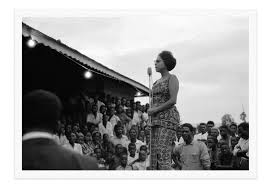
Born to 14-year-old Josephine Wouassimba and 40-year-old Pierre Gerbillat, a French man, on December 16 1921, in Bessou in Ubangi-Shari (the Central African Republic).
She was taken from her mother to an orphanage in Brazzaville when she was three. In her teenage, she escaped the orphanage and the likelihood of getting married early.
Disturbed by the discriminatory and humiliating experiences of the colonial system, she delved deep into politics.
She became involved with Rassemblement Démocratique Africain (RDA)
The first French-speaking pan-African organisation, in French Guinea, in 1958, just before the referendum, to decide whether to attain independence or remain a colony.
When travelling with her husband, a mine worker, she met Sékou Touré, leader of the independence movement in the French-ruled country. She threw in her weight by organising rallies and giving lectures on independence.
She also lobbied for and counselled many other African leaders, including Ghana’s Kwame Nkrumah, fighting against colonialism. Her work led her to Belgian Congo, where the leader of one of its largest political parties, Parti Solidaire Africain (PSA), recruited her. She became the head of the women’s wing, preaching feminism that caught the attention of everyone.
The party later merged with Lumumba’s Movement Nationale Congolaise (MNC) and won its independence in June 1960, although a lot of lives were lost in this battle. Lumumba declared in 1960 that universal voting rights should include women, but they were only granted suffrage in 1967. Blouin became chief of protocol in Lumumba’s government.
Just before Lumumba was executed, Blouin was expelled from Congo. On her way to the airport, she had hidden a political document that had the signatures of Congo’s nationalist leaders. The document also revealed Belgium’s interference in Congo’s transition to independence.
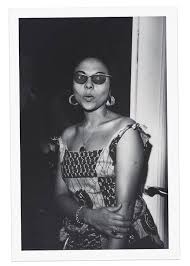

A journalist once asked her whether she was a Communist. She responded, “Let small fools call me what they like. I am an African nationalist.”
In 1973, her husband divorced her, and she moved back to Paris. She opened her home to revolutionaries, catering to them.


Read more

Two Important Inventions That Would Not Exist Without Black Women

This is the final week and first part of our biweekly series that focuses on black women who changed the world with their inventions

Margaret Eloise knight

Margaret knight

Margaret Eloise Knight, also known as the female Edison, was born on February 14, 1838, in York Main, United States, to Hanna Teal and James Knight.

At a tender age, she had an apparent fascination with woodwork and tinkering. She rarely spent time with other girls and toys, choosing instead to be surrounded by wood and metals.

This interest in machines led to her first invention when she was 12. She was visiting her brother, who worked at a textile mill. One of the loom machines spoiled, and its shuttle hit a worker. Margaret then created a device to prevent the shuttle from falling off. This eventually became the first of many technical innovations in the textile mills industry and the standard fixture on looms.

However, this invention was never patented because of her age and because of the lack of financial resources, she never finished school and began to work in a textile mill to help her mother. She also took up menial jobs like engraving, photography, upholstery etc.

In 1867, while working for the Columbia Paper Bag Company, she discovered that folding paper bag was problematic and then thought of an easier way to do it. She thought of a bag folding machine that would be able to cut, glue, and fold paper to form the flat bottom paper bags, which are still widely used today.

She then made a wooden model of her machine and took it to a machine shop worker, Charles Annan, to make a working iron model. He stole her idea and patented it. On finding out, she filed a lawsuit and regained her idea and got her patent in 1971.

She invented many more devices to make work and life easier. These inventions shoe to dressmaking machines, all of which were patented between 1902 and 1915.

She never married and died on October 12, 1914.

A clothes wringer


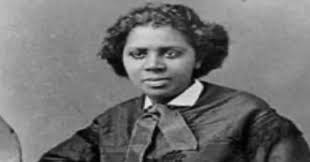
Ellen Eglin

While very little remains known about Ellen’s early life, she was born in Washington, DC, in 1849.

At a young age, she took on jobs as a housekeeper and a clerk in a government firm. Her work as a housekeeper meant having to do laundry ever so often. The time-consuming task of scrubbing on washboards and hand rinsing was back-breaking.

This led to her inventing the wringer in 1888, a highly sought after device that she never patented, received recognition for or received no financial rewards.

In 1891, she had an interview with a magazine that highlighted female inventors; Eglin said, “You know I am Black, and if it were known that a negro woman patented the invention, white ladies would not buy the wringer.” This was the reason she sold her design to a white agent for $18.

Little is also known about her life and her death.

READ ALSO 👇👇👇

Two Important Inventions That Will Not Exist Without Black Women

Two Important Inventions That Would Be Impossible Without Black Women

Two Important Inventions That Would Not Exist Without Black Women

Two Inventions that will not exist without Black Women

Two Important Inventions That Would Not Exist Without Black Women

The Beothuk And How Their Contact With The Europeans In 1497 Led To Their Extinction

The Beothuk people have never had a significant population; in fact, they were estimated to be around 800-1000, all of whom are dead.

Their contact with John Cabot in 1497 started the eventual extinction that was to follow for the next 350 years.

These indigenous people of Newfoundland island were a hunter-gatherer nation. They lived and hunted in family groups, staying inland most of the time and only moving to camp near the river to fish and get water in summer and early fall.

During the camping period, they held festivities, arranged marriages, and traded and exchanged information. Despite being Hunters, they managed their resources efficiently, making sure not to overfish or overhunt any animal.

The first set of Europeans to set their gaze on the sea didn’t build homes and only had camps they stayed in. This made it easier for the Beothuk people to coexist with them.

They bartered silently with these Europeans, dropping things of interest at specific points for them and benefiting from the things they got in return. However, they refused to have anything to do with the firearms left for them.

In the 17 century, this peaceful existence and cooperation came to an end when Europeans began to settle on the coasts, which was the traditional gathering place of the Beothuk people. These settlers also cut them off from the sea, which served as their primary food and drinks water source.

Hunting the Beothuk people soon became a fun activity among the island whites, and they made use of numerous means to hunt them down, and until recently, Alexander bay was known as the bloody bay because it flowed with the blood of the indigenous people.

The whites hunted these indigenous people down because they considered them nuisances in the land they sought to establish for themselves. Eventually, hunting them down became a thing of fun. A common saying among the anglers was that they would rather hunt the Beothuks than fishes.

For more than a hundred years, the murder of a Beothuk wasn’t considered a crime, and when it was eventually considered a crime, none of the perpetrators was ever punished.

For more than two centuries, the Beothucks were hunted everywhere as the settlers competed to see who could kill the most Beothuks.

When the archives of the first Earl of Liverpool went on sale, “the Liverpool manuscript,” which contained long, first-hand accounts of the Beothuk hunters’ adventures, came to light, proving that these stories which were compiled in 1792 and told by word of mouth were in no way exaggerated.

As a result of how unsafe it was to stay in a specific location, the Beothuks kept moving, and many were lost to the cold weather, diseases and hunger that ravaged them. The rest were captured when seen and sold into slavery.

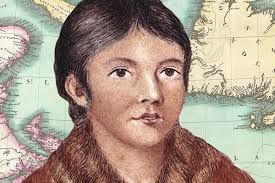
In 1819, the Beothuks that remained were about a handful. In the same year, some settlers captured a woman called Demasduit and her husband, Nonosabasut, was shot and killed when he tried to defend her. His brother was not spared. Demasduit was taken away from her newborn child, who died two days later. A few months later, Demasduit died of tuberculosis. In 1829, ten years later, the last known surviving Beothuk and Demasduit’s niece died of tuberculosis.

Two Important Inventions That Will Not Exist Without Black Men

This is the third week of our biweekly series that focuses on black men who changed the world with their inventions.

Percy Lavon Julian

Percy lavon Julian

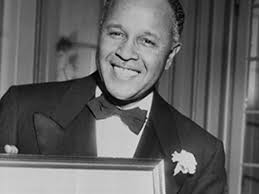
The pioneer of the chemical synthesis of medicinal drugs from plants set a foundation for the steroid drug industry. He was born April 11, 1899, in Montgomery, Alabama, USA, to James Sumner Julian and his wife, Elizabeth Lena Adams. The oldest of six children and grandson of a former slave. James, his father, was a federally employed railway mail clerk, and so their family was more privileged than most black families.
In 1916, when he was 17, he was accepted as a sub-freshman at DePauw University in Greencastle, Indiana. And so, in addition to his regular college courses, he took remedial classes at a nearby high school.
He lived in an off-campus boarding home and
worked part-time at a fraternity house and also as a ditch digger. He excelled, and he graduated as valedictorian of his class with a chemistry degree in 1920.
Julian received a Rockefeller Foundation grant, and it presented him with the opportunity to earn his doctorate degree in 1929. He studied plant alkaloid chemistry under the tutelage of Ernst Späth at the University of Vienna, Austria.
In 1931, he received his PhD and taught for two years at Howard. Then in 1933, he went back to DePauw University to teach senior courses in organic chemistry.
His research led to understanding the chemical synthesis of drugs to treat glaucoma and arthritis. He also invented a product that uses soy protein to put out oil and gas fires and was widely used in World War II, called the Aero foam.
He established his laboratory called Julian laboratory in 1954 and sold it in 1961, making him one of the first Black millionaires. Julian became the first Black chemist elected to the National Academy of the Sciences in 1973.
He died of liver cancer on April 19, 1975.

Lewis Howard Latimer

Lewis Howard Latimer

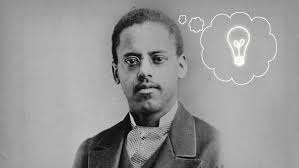
Born born in Chelsea, Massachusetts, on September 4, 1848, to parents who had fled slavery, Lewis Howard Latimer was an inventor and draftsman best known for his contributions to the patenting of the light bulb and the telephone.
While working at a patent firm, he learned the art of mechanical drawing. He worked closely with Thomas Edison and Alexander Graham Bell in the course of his career as a draftsman.
He was the youngest of George and Rebecca Latimer’s four children. Latimer worked to help support his mother and his family, and in 1864, at the age of 16, Latimer lied about his age so he could enlist in the United States Navy during the Civil War.
After which, he worked at the Crosby and Gould patent law office. Latimer also designed a number of his own inventions, like an early air conditioning unit and an improved railroad car bathroom. While working with Bell, he helped draft the patent for Bell’s design of the telephone. He was also involved in the field of incandescent lighting, a particularly competitive field, working for Hiram Maxim and Edison.
He continued to work as a patent consultant until 1922, and he died on December 11, 1928, in New York.

READ ALSO 👇👇👇

Two Inventions That Will Not Exist Without Black Men

Two Important Inventions That Would Not Exist Without Black Men

Two Important Inventions That Would Not Exist Without Black Men

Two Important Inventions That Would Not Exist Without Black Men

This is the third week of our May biweekly series that focuses on black men who changed the world with their inventions.

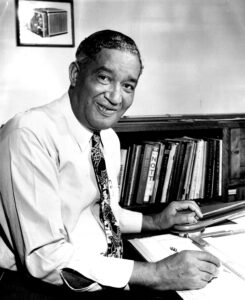
MINNEAPOLIS, MN. – MAY 1949: Frederick McKinley Jones, 55, chief engineer for Thermo Control Company of Minneapolis, photographed May 3, 1949 by Minneapolis Tribune photographer Sharee Marcus.
Jones, an inventor with 61 patents, including several for early refrigerated trucks, also invented a movie theater ticket dispenser and portable X-ray machine.


Frederick McKinley Jones

Frederick Jones was one of the most prolific black inventors. He was an inventor, entrepreneur, engineer, winner of the National Medal of Technology, and an inductee of the National Inventors Hall of Fame. He was born on 17 May 1893 in Covington, Kentucky, USA. His father, an Irish man, John Jones, was a railroad worker who tried to raise him independently. Father Ryan, a Catholic priest, took Jones in when he was eight and two years later, his father died.
At the age of 11, when Jones was in sixth grade, he left school in Cincinnati, Ohio. There, he took on menial jobs and by the time he was 14, he had become a garage foreman.
Jones majorly educated himself by reading voraciously, studying and willing to start afresh always.
In 1912, he moved to Minnesota and worked as a mechanic on a farm owned by James J. Hill, who also owned the Great Northern Railroad. As a result of how close he was to the railroad, he began learning about steam locomotive engines and electricity.
At the age of 20, he received his engineering licence, which he later upgraded to the highest grade. Later on, he built a transmitter for the town’s first radio station. He also created a device that combined sound with motion pictures. This attracted the attention of Joseph A. Numero, who employed him to work for his firm.
He invented over 60 products and was awarded 61 patents in his lifetime. His most famous invention was the development of the first transportation freezer.
He died on 21 February 1961.

George Washington Carver

George Washington Carver

George Washington Carver was born into slavery just before slavery ended in Diamond Grove, Missouri. He knew neither of his parents but was raised by Moses and Susan Carver, who owned his mother.
He was a sickly child, and so he spent his days assisting Susan with housework. He learnt at a tender age how to cook, mend, do laundry, and embroider. He also assisted Susan on the farm, and he developed an interest in gardening. He was an avid reader.
When he turned 11, he moved to Neosho for studies. There he lived with Mariah and Andrew Watkins in exchange for helping with household tasks such as laundry.
Mariah Watkins impacted George Washington Carver in many ways. For over a decade, he shuttled and survived on the skills he got from his younger age.
He later pursued higher education at Simpson College, where he studied grammar, arithmetic, etymology, voice, and piano. His teacher encouraged him to study Botany and enrol at Iowa State, the agricultural college in Ames. He decided then to be a trained agriculturist.
He taught and conducted research for many years at Tuskegee University. As an agriculturist, he invented hundreds of products using peanuts, soybeans and sweet potatoes.
He died in 1915, and soon after, his childhood home was made a national monument, the first time such an honour had been bestowed on an African American.

READ ALSO 👇👇👇

Two Important Inventions That Would Not Exist Without Black Men

Two Inventions That Will Not Exist Without Black Men

Two Important Inventions That Would Not Exist Without Black Men

Two Important Inventions That Would Not Exist Without Black Women

This is the third week and second part of our May biweekly series that focuses on black women who changed the world with their inventions.

Alice Ball

Alice Ball

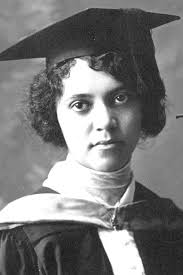
Alice Augusta Ball was born on July 24, 1892, in Seattle, Washington. Her father, a lawyer, photographer and Black newspaper editor, James Presley Ball Jr., married Laura Louise Howard Ball, a white photographer who grew up in a prestigious, middle-class family.
James Presley Ball, her paternal grandfather, was a renowned photographer who had captured famous people. At 10, her family moved to Honolulu, believing that the warm weather would cure her grandfather’s arthritis.
In 1904, her family moved back to Washington. She had chronic asthma, which caused her to have a small stature, but despite this, she was very active.
She furthered her studies at the Washington University, where she earned two degrees in four years, and after that, she moved back to Hawaii to earn the third degree. She graduated in 1915, becoming the University’s first Black woman chemistry instructor, its first Black and first female master’s degree holder.
Her studies on the chemical make-up of plants attracted the attention of Harry T. Holdman. In 1915, he asked her to help find a way to make chaulmoogra tree oil more injectable for the Cure of leprosy.
This meant that most of her time when she wasn’t teaching English or lecturing at the University was spent trying to find a way to make chaulmoogra tree oil more dissolvable in water.
Less than a year later, with the help of Arthur L. Dean, she learnt that by freezing the oil’s fatty acids to isolate its ester compounds, it could be modified to form an injectable, water-soluble yet effective treatment.
In 1916, she fell ill and died. After her death, Dean published her discovery and claimed it as his own, calling it the Dean method. For decades, the truth of Ball’s discovery was ignored till Holdman gave credit to her discovery, and it was eventually looked into.


Mary Beatrice kenner


Mary Beatrice Kenner

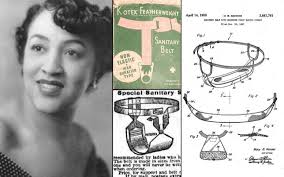
Mary Beatrice Kenner, the African American woman with the most patents, was born in Monroe, North Carolina, on May 17, 1912. While her mother is unknown to public records, her father, Sidney Nathaniel Davidson, was an inventor.
She began inventing at the age of 6 when she tried creating a self-oiling door hinge. Her family had numerous inventors, from her grandfather to her father and sister.
She graduated from Dunbar High School in 1931 and dropped out of Howard University for financial reasons. She took odd jobs up till 1941, when she became a federal employee.
She became a professional florist in 1950, had her shop and invented things in her spare time. Her first patent was in 1957 for the sanitary belt, which despite her creating it in the 1920’s she could not afford to patent.
She patented numerous other things. In 1951, she got married to James Kenner, and they both were foster parents. He died in 1983, and Mary Beatrice Davidson Kenner died on January 13, 2006, without receiving any awards or formal recognition for her innovations.

READ ALSO 👇👇👇

Two Important Inventions That Will Not Exist Without Black Women

Two Important Inventions That Would Be Impossible Without Black Women

Two Important Inventions That Would Not Exist Without Black Women

Two Inventions that will not exist without Black Women

Two Important Inventions That Would Not Exist Without Black Women


The Rwandan Genocide; A Hundred Death-Days.

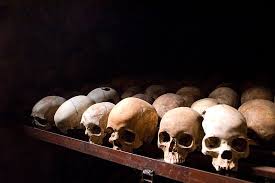
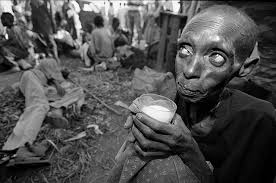
The Rwandan genocide, otherwise known as the genocide against the Tutsi, took place from 7 April to 15 July 1994 during the Rwandan civil war.

In this hundred days time frame, members of the Tutsi minority ethnic group were majorly targeted and killed, and a majority of the killings and violence were perpetrated by the Hutus.
This genocide was triggered by the assassination the Rwandan President Juvenal Habyarimana, a Hutu man, when his plane was shot down on 6 April 1994 above Kigali airport.
The ethnic friction between the majority Hutus and minority Tutsis has always existed in Rwanda, and it’s only gotten worse over the years, especially after the Belgian colonists considered the Tutsis to be superior to the Hutus and gave them better education and employment opportunities.
This led to an increase in the resentment the Hutus had for the Tutsis, and in 1959, there were a series of riots that resulted in the killing of over 20000 Tutsis.
At the end of the Belgian rule and with Rwanda regaining her independence, the Hutus came into power, and the Tutsis bore the weight of every wrong that occurred.
This was the situation that led Tutsi in Uganda, aided by a few Hutus, to form the Rwandan Patriotic Front (RPF), led by Mr Kagame, with the aim of returning to their homeland and overthrowing the government.
After months of negotiations and a series of attacks, a peace accord was signed between Habyarimana and the RPF in August 1993. However, it didn’t quench the fire, and so when Habyarimana’s plane was shot down at the beginning of April 1994, it triggered the Hutus who felt the Tutsi carried out the attack.

It remains yet to be known who killed the president – and with him, the president of Burundi and many chief members of staff, but the effects were immediate and horrific.
In Kigali, the presidential guard declared retribution and immediately, the slaughter of Tutsis and moderate Hutus began. Military officials, politicians and businessmen, and the early organisers sent recruits to carry out the massacre. These organisers soon joined in the blood spillage and made their way through the Tutsi population with machetes or blew them up in churches where they had taken refuge.
The Government-sponsored radio stations started demanding that ordinary Rwandan civilians murder their Tutsi neighbours to get rewards like food, drugs and money. In about three months, over 800,000 people had been murdered. The murderers also used rape as a weapon, intentionally spreading HIV/AIDS among the Tutsi women.
This caused the RPF to fight for itself and the Tutsis, and thus along with genocide, a civil war was taking place.

Tides changed, and by July, the RPF had control over Kigali and the majority of Ugandan states. This victory led over 2 million Hutus to flee to other neighbouring countries.
The RPF then set up a coalition government, with a Hutu, Pasteur Bizimungu, as president and a Tutsi, Paul Kagame as defence minister and vice president.
The UN and international community remained on the sidelines through the war and were passive.
After the genocide, a new constitution was written, one that didn’t make room for ethnicities but regarded every Rwandan as one and same. The country also spent years getting justice done and reconciliation, trying those they held responsible for the genocide, rebuilding their economy and promoting national unity.
In November 1994, the UN created the International Criminal Tribunal for Rwanda (ICTR; formally known as the International Criminal Tribunal for the Prosecution of Persons Responsible for Genocide and Other Serious Violations of International Humanitarian Law Committed in the Territory of Rwanda and Rwandan Citizens Responsible for Genocide and Other Such Violations Committed in the Territory of Neighbouring States between 1 January and 31 December 1994).
This body could only impose terms of imprisonment and not capital punishment. They ruled that genocide included “subjecting a group of people to a subsistence diet, systematic expulsion from homes and the reduction of essential medical services below the minimum requirement.” They were also of the opinion that “rape and sexual violence constitute genocide…as long as they were committed with the specific intent to destroy, in whole or in part, a particular group, targeted as such” as was seen in the intent of the Hutus to wipe out the Tutsi. This action made the tribunal to be one of the first international bodies to formally recognise rape as a weapon of war and sexual violence as a war crime.

Two Inventions That Will Not Exist Without Black Men

This is the second part of our biweekly series that focuses on black men who changed the world with their inventions.


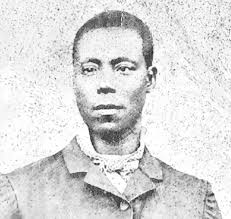
Thomas Jennings


Thomas L. Jennings:

Thomas Jennings was the first black man to receive a patent. The patent was awarded on March 3, 1821 (US Patent 3306x) for his discovery of a process called dry-scouring, which was the forerunner of today’s modern dry-cleaning.
Jennings was born a freeman in New York City, New York, in 1791. He went on to become a tailor and open a dry cleaning business. While working as a dry cleaner, He developed dry scouring.
This created a lot of controversies because, ideally, slaves couldn’t own rights to their inventions; however, Thomas was a free man, and so he was able to gain exclusive rights.
Thomas Jennings was very passionate about abolitionist causes, and he used the income from his invention to free the rest of his family from slavery and fund abolitionist causes.
Thomas Jennings died in New York City in 1856.

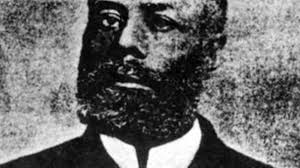
Elijah McCoy


Elijah McCoy:

Elijah McCoy was born on May 2, 1884, in Colchester, Ontario, Canada, to George and Mildred Goins McCoy.
The McCoys were slaves who had escaped via the Underground Railroad from Kentucky to Canada.
The large family returned to the United States in 1847, settling in Ypsilanti, Michigan. At an early age, Elijah began to show a strong interest in mechanics, and so his parents sent him to Scotland when he was 15 for an apprenticeship in mechanical engineering.
After becoming certified as a mechanical engineer, he returned home to Michigan. Elijah, despite his experiences and qualifications, McCoy was unable to find any work as an engineer in the United States because of the racial barriers as skilled professional positions were not given to African Americans at the time, irrespective of what their training or background was.
McCoy had no choice but to accept a position as a fireman and oiler for the Michigan Central Railroad. He developed his first major inventions on this job. McCoy invented a lubricating cup that distributed oil evenly over the engine’s moving parts after studying the inefficiencies inherent in the existing system of oiling axles.
He obtained a patent for this invention that allowed trains to run continuously without pausing for maintenance for long periods and distances. He continued building and trying to make his products better, and over the course of his life, he received nearly 60 patents.
McCoy died in Detroit, Michigan, on October 10, 1929. He was 85 years old. He is buried at Detroit Memorial Park East in Warren, Michigan.

READ ALSO 👇👇👇

Two Important Inventions That Would Not Exist Without Black Men

Two Important Inventions That Would Not Exist Without Black Men

Two Important Inventions That Will Not Exist Without Black Women

Two Inventions that will not exist without Black Women

This is the second part of our biweekly series that focuses on black women who changed the world with their inventions.

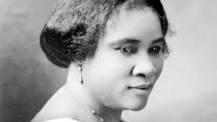
Madam C.J Walter

Madam C.J Walker:

Sarah Breedlove, also known as Madam C.J Walker born on December 23, 1867. She was born on the same Delta, Louisiana plantation where her parents, Owen and Minerva Anderson Breedlove, had been enslaved before the end of the Civil War.
She grew from the cotton fields of the South to the washtub, and from there, she was promoted to be the kitchen cook. From that position, she promoted herself into the business of manufacturing hair goods and preparations, and soon enough, she built her factory on the ground.
Madam C.J invented her line of African American hair products that enabled her to become America’s first female self-made millionaire after suffering from a scalp ailment that resulted in her hair loss. She eventually established Madame C.J. Walker Laboratories to manufacture cosmetics and train sales beauticians by travelling around the country and giving lecture demonstrations.
As her hair care industry grew, Walker quickly immersed herself in the social and political culture of the Harlem Renaissance. She also founded philanthropies that included educational scholarships and donations to homes for the elderly, the NAACP, and the National Conference on Lynching, among other organizations, focused on improving the lives of African Americans.

Sarah Goode

Sarah Goode:Inventor and entrepreneur Sarah E. Goode was one of the first African American women to be granted a patent by the U.S. Patent and Trademark Office to invent a folding cabinet bed in 1885.
She was born into slavery in 1850, and she received her freedom at the end of the Civil War; she moved to Chicago and became an entrepreneur. She and her husband, Archibald, a carpenter, owned a furniture store.
In trying to provide a solution to the fact that most of her customers lived in small apartments and so didn’t have space for furniture, Goode invented “cabinet beds”, which she called folding beds.
When the bed was not being used, it could be used as a roll-top desk, complete with compartments for stationery and other writing supplies. Goode also received a patent for her invention on July 14, 1885. She died in 1905.

READ ALSO 👇👇👇

Two Important Inventions That Will Not Exist Without Black Women

Two Important Inventions That Would Be Impossible Without Black Women

Two Important Inventions That Would Not Exist Without Black Women

Two Inventions that will not exist without Black Women

Two Important Inventions That Would Not Exist Without Black Women