

Slave Revolts IV: Nat Turner’s Rebellion of 1831

Nat Turner’s slave revolt.
Considered to be one of America’s most successful slave revolts because of the conversations it forced enslavers and America to have, the Nat Turner slave revolt took place in August 1831 in South Hampton County, Virginia, and it was led by Nathaniel Turner.
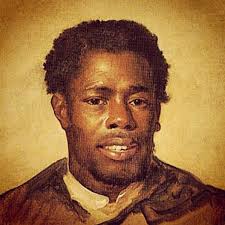
Nat Turner

Born into slavery in November 1800, Nathaniel Turner was an African American slave and pastor in Virginia.
He learnt to read and write at a young age, being known by many for his intelligence. He was also very religious, always immersed in religious activities.
His life was influenced by the many visions he had, which he believed were messages from God. In 1830, he was purchased by Joseph Travis, a kind master who had faith in him.
On February 12, 1831, Nathaniel Turner saw the solar eclipse and interpreted it as a sign from God to start an uprising. He began purchasing muskets and shared his plan with the four other slaves he trusted.
On August 21, he began his revolt, and in addition to the slaves he trusted, he recruited over 70 more enslaved and free blacks, some of them riding on horses. They travelled from house to house, freeing slaves and killing slave owners.
The revolt succeeded in killing about 60 whites before they were defeated by the state military. Turner, however, managed to escape and avoid capture for over a month.
He was eventually found and arrested. He confessed to spearheading the revolt saying that part of his purpose was to infuse fear into the minds of the whites.
He was hanged on November 11, 1831, in Jerusalem, Virginia, and his body was dissected to make purses as souvenirs for people.
The aftermath of this revolt resulted in whites killing over 150 blacks as they deemed fit. They also passed a very strict law forbidding the blacks from being educated and from attending religious meetings that weren’t led by whites. 
Read more

Two Important Inventions That Would Not Exist Without Black Men

This is the third week of our May biweekly series that focuses on black men who changed the world with their inventions.

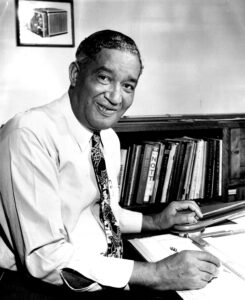
MINNEAPOLIS, MN. – MAY 1949: Frederick McKinley Jones, 55, chief engineer for Thermo Control Company of Minneapolis, photographed May 3, 1949 by Minneapolis Tribune photographer Sharee Marcus.
Jones, an inventor with 61 patents, including several for early refrigerated trucks, also invented a movie theater ticket dispenser and portable X-ray machine.


Frederick McKinley Jones

Frederick Jones was one of the most prolific black inventors. He was an inventor, entrepreneur, engineer, winner of the National Medal of Technology, and an inductee of the National Inventors Hall of Fame. He was born on 17 May 1893 in Covington, Kentucky, USA. His father, an Irish man, John Jones, was a railroad worker who tried to raise him independently. Father Ryan, a Catholic priest, took Jones in when he was eight and two years later, his father died.
At the age of 11, when Jones was in sixth grade, he left school in Cincinnati, Ohio. There, he took on menial jobs and by the time he was 14, he had become a garage foreman.
Jones majorly educated himself by reading voraciously, studying and willing to start afresh always.
In 1912, he moved to Minnesota and worked as a mechanic on a farm owned by James J. Hill, who also owned the Great Northern Railroad. As a result of how close he was to the railroad, he began learning about steam locomotive engines and electricity.
At the age of 20, he received his engineering licence, which he later upgraded to the highest grade. Later on, he built a transmitter for the town’s first radio station. He also created a device that combined sound with motion pictures. This attracted the attention of Joseph A. Numero, who employed him to work for his firm.
He invented over 60 products and was awarded 61 patents in his lifetime. His most famous invention was the development of the first transportation freezer.
He died on 21 February 1961.

George Washington Carver

George Washington Carver

George Washington Carver was born into slavery just before slavery ended in Diamond Grove, Missouri. He knew neither of his parents but was raised by Moses and Susan Carver, who owned his mother.
He was a sickly child, and so he spent his days assisting Susan with housework. He learnt at a tender age how to cook, mend, do laundry, and embroider. He also assisted Susan on the farm, and he developed an interest in gardening. He was an avid reader.
When he turned 11, he moved to Neosho for studies. There he lived with Mariah and Andrew Watkins in exchange for helping with household tasks such as laundry.
Mariah Watkins impacted George Washington Carver in many ways. For over a decade, he shuttled and survived on the skills he got from his younger age.
He later pursued higher education at Simpson College, where he studied grammar, arithmetic, etymology, voice, and piano. His teacher encouraged him to study Botany and enrol at Iowa State, the agricultural college in Ames. He decided then to be a trained agriculturist.
He taught and conducted research for many years at Tuskegee University. As an agriculturist, he invented hundreds of products using peanuts, soybeans and sweet potatoes.
He died in 1915, and soon after, his childhood home was made a national monument, the first time such an honour had been bestowed on an African American.

READ ALSO 👇👇👇

Two Important Inventions That Would Not Exist Without Black Men

Two Inventions That Will Not Exist Without Black Men

Two Important Inventions That Would Not Exist Without Black Men