Slave Revolts IV: Nat Turner’s Rebellion of 1831

Nat Turner’s slave revolt.
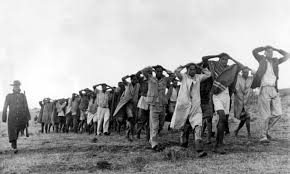
Considered to be one of America’s most successful slave revolts because of the conversations it forced enslavers and America to have, the Nat Turner slave revolt took place in August 1831 in South Hampton County, Virginia, and it was led by Nathaniel Turner.
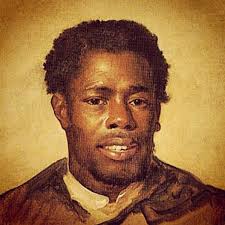
Nat Turner

Born into slavery in November 1800, Nathaniel Turner was an African American slave and pastor in Virginia.
He learnt to read and write at a young age, being known by many for his intelligence. He was also very religious, always immersed in religious activities.
His life was influenced by the many visions he had, which he believed were messages from God. In 1830, he was purchased by Joseph Travis, a kind master who had faith in him.
On February 12, 1831, Nathaniel Turner saw the solar eclipse and interpreted it as a sign from God to start an uprising. He began purchasing muskets and shared his plan with the four other slaves he trusted.
On August 21, he began his revolt, and in addition to the slaves he trusted, he recruited over 70 more enslaved and free blacks, some of them riding on horses. They travelled from house to house, freeing slaves and killing slave owners.
The revolt succeeded in killing about 60 whites before they were defeated by the state military. Turner, however, managed to escape and avoid capture for over a month.
He was eventually found and arrested. He confessed to spearheading the revolt saying that part of his purpose was to infuse fear into the minds of the whites.
He was hanged on November 11, 1831, in Jerusalem, Virginia, and his body was dissected to make purses as souvenirs for people.
The aftermath of this revolt resulted in whites killing over 150 blacks as they deemed fit. They also passed a very strict law forbidding the blacks from being educated and from attending religious meetings that weren’t led by whites. 
Read more

Slave Revolts III: The Denmark Vesey Rebellion Of 1822

Denmark Vesey’s rebellion of 1822 was very similar to the Gabriel Prosser rebellion of 1800 in the fact that his plan was exposed by two slaves, and it never happened.
Denmark Vesey was born in 1767. He was born into slavery but could purchase his freedom at the age of 32 when he won the lottery. Unfortunately, this couldn’t pay for the freedom of his wife and their children.
Denmark helped found an independent African Methodist Episcopal (AME) congregation in the city in 1818. With the support of white clergy, and over 1,848 members, the church rapidly became the second-largest AME congregation in the nation.
After gaining his freedom, Vesey continued to identify and relate with many slaves. He became set on helping enslaved people break free from the bonds of slavery. Vesey and some slaves began to plan a revolt in 1821.

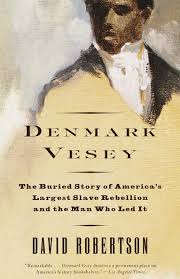
Denmark Vesey

Denmark recruited other slaves so the number could be able to guarantee some sort of Victory. As a preacher, Denmark could use religious classes as a font to carry out plans for this rebellion in his home. By connecting the story of God delivering the children of Israel from slavery, he was able to inspire slaves to his cause.
Vesey being a successful carpenter with a flourishing business, intended for the insurrection day to coincide with the French Revolution, which abolished slavery in Saint-Domingue on July 14, 1822, also known as Bastille Day.
The news of the plan was spread through the majorly black population of Charleston, among which was an ever-growing population of free people of colour who generally supported the movement.
Soon enough, Denmark had numerous people who had pledged to the revolt. His first plan was to attack and get weapons from the Charleston Meeting Street Arsenal, kill white slaveholders and liberate the slaves, then commandeer ships from the harbour and sail to Haiti.
Denmark fearing that as a result of the number of people that knew, word of the plot would get out, moved the date of the insurrection forward. Two slaves who were loyal to their masters and opposed to the scheme exposed the plan to their masters, who eventually alerted Charleston officials.
James Hamilton, the mayor, was informed, and he organized the city’s military to find the suspects. By the end of June, Denmark and many other suspects were arrested and held until the court heard evidence against them.
The court, however, first published its judgment of Denmark Vesey and five black slaves guilt, sentencing them to death. The six men were executed by hanging on July 2. None of the six had confessed, and each proclaimed his innocence to the end.
Wary about the legality of the court proceedings, Governor Thomas Bennett Jr and his brother in law, Justice Johnson, consulted with the Attorney General for the state, Robert Hayne. Robert Hayne responded, saying that slaves weren’t covered by the same rights as freemen.
Following the concerns of the Governor and Justice Johnson, the courts sped up the process, arresting blacks as they deemed fit. Eventually, the court found it difficult to get conclusive evidence.

Read more